
What is PandaDeposit?
PandaDeposit is our name for Security Deposit Replacement or SDR for short. PandaDeposit does two things:
On this page
PandaDeposit is our name for Security Deposit Replacement or SDR for short. PandaDeposit does two things:
- 1For the tenant: It reduces move-in costs.
- 2For the owner: It makes leasing your unit easier.
Instead of a full month of rent, tenants pay a smaller non-refundable premium as either a one-time or monthly fee. The owner receives a fully executed Deposit Bond, which protects them against anything a normal security deposit can legally cover.
This article will give a broad overview, of how what PandaDeposit covers, when you should use it, how much it costs, and how tenants apply.
What does PandaDeposit cover?
PandaDeposit covers anything you are legally allowed to deduct from a security deposit. This varies depending on the jurisdiction, but typical things this can apply to:
- Damage in excess of normal wear and tear
- Unpaid rent
- Unpaid utility bills
- Cleaning costs to return the unit to its original condition
- Legal fees
Ask: "Can I legally deduct this from a security deposit?"
If the answer is yes, then it's covered. If the answer is no, then it's not.
You can learn more about what this covers in our article: What does PandaDeposit Cover?
When should I offer PandaDeposit?
Depending on which use case (or both) applies to you, PandaDeposit is used in two different ways.
1. Offered alongside a required Lease Rental Bond.
If a tenant doesn't meet your typical screening criteria, you might consider offering them a conditional approval. A Lease Rental Bond protects you against unpaid rent, allowing you to rent to a broader group of tenants.
The premium for a Lease Rental Bond can be as low as 20% of one month's rent per year, or as high as 125% of one month's rent, but for most applicants it falls somewhere around 70% of one month's rent. This creates an additional upfront cost for the tenant, which can make renting your property cost-prohibitive for this renter.
By offering PandaDeposit alongside the lease guarantee, you can reduce the upfront costs to be more in line with what tenants are expecting to pay.
Instead of paying:
- 1 month rent
- 1 month deposit
- ~70% guarantor fee.
The tenant will pay:
- 1 month rent
- ~1 month PandaGuarantee + Deposit Fee
Most tenants expect to pay 2 months upfront when moving, so adding PandaDeposit makes your rental more attractive.
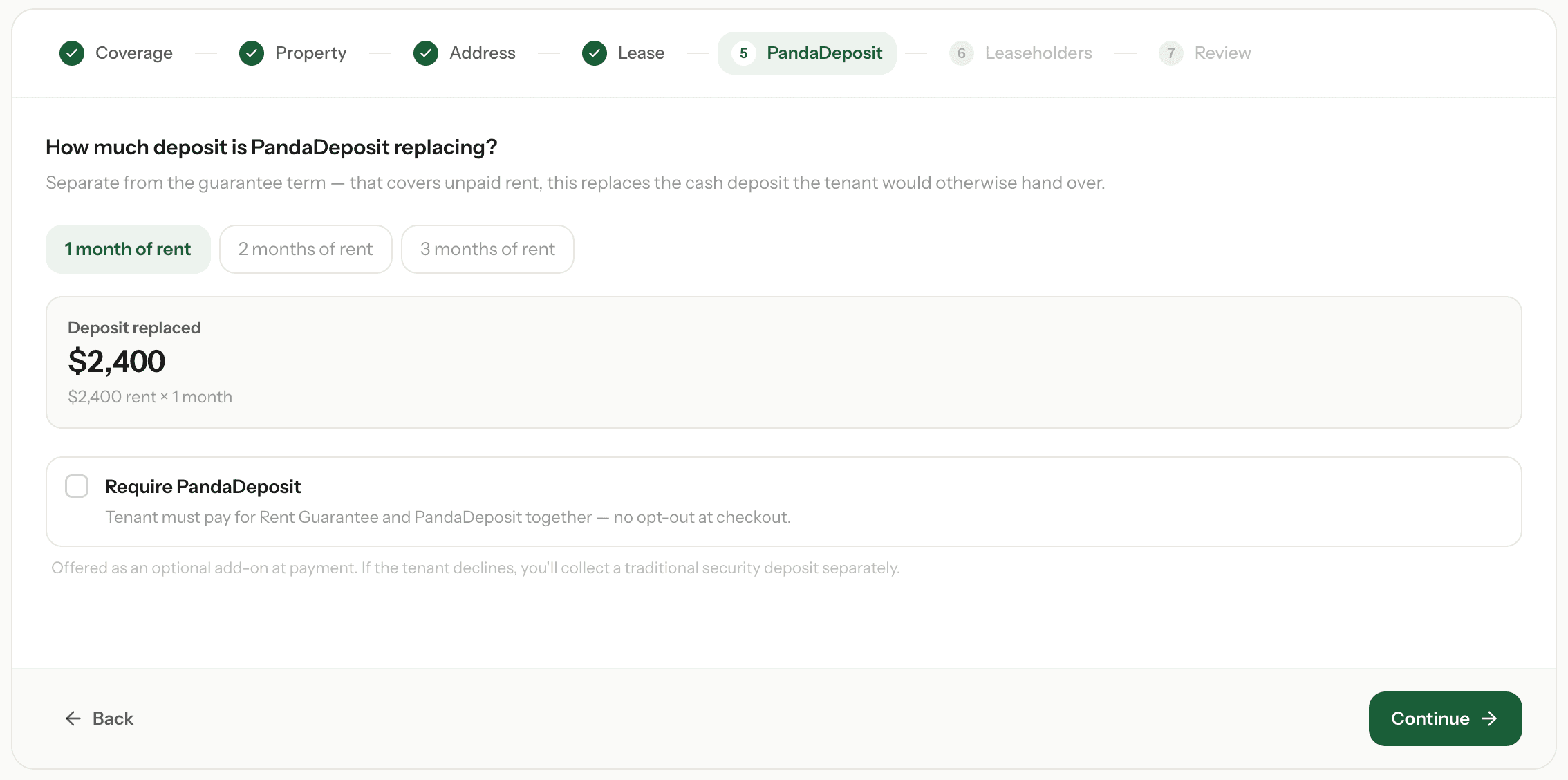
When inviting a tenant, you will see PandaDeposit as an option on the lease details page. You can learn more in our article on adding PandaDeposit to PandaGuarantee.
2. Available to all new tenants, as an incentive to reduce vacancy.
The most important job of a leasing agent is attracting new tenants at a desirable monthly rent. Upfront move-in costs are an important consideration for potential tenants, so reducing this cost can make your rental more attractive, and therefore reduce vacancy.
Offering PandaDeposit to all new prospective tenants allows them to pay a small monthly fee, or an upfront fee a fraction of what the deposit would be. You can learn more about this in our article: Invite a Tenant to Apply for PandaDeposit.
What does it cost?
PandaDeposit is free to landlords, the premium is paid for by the tenant.
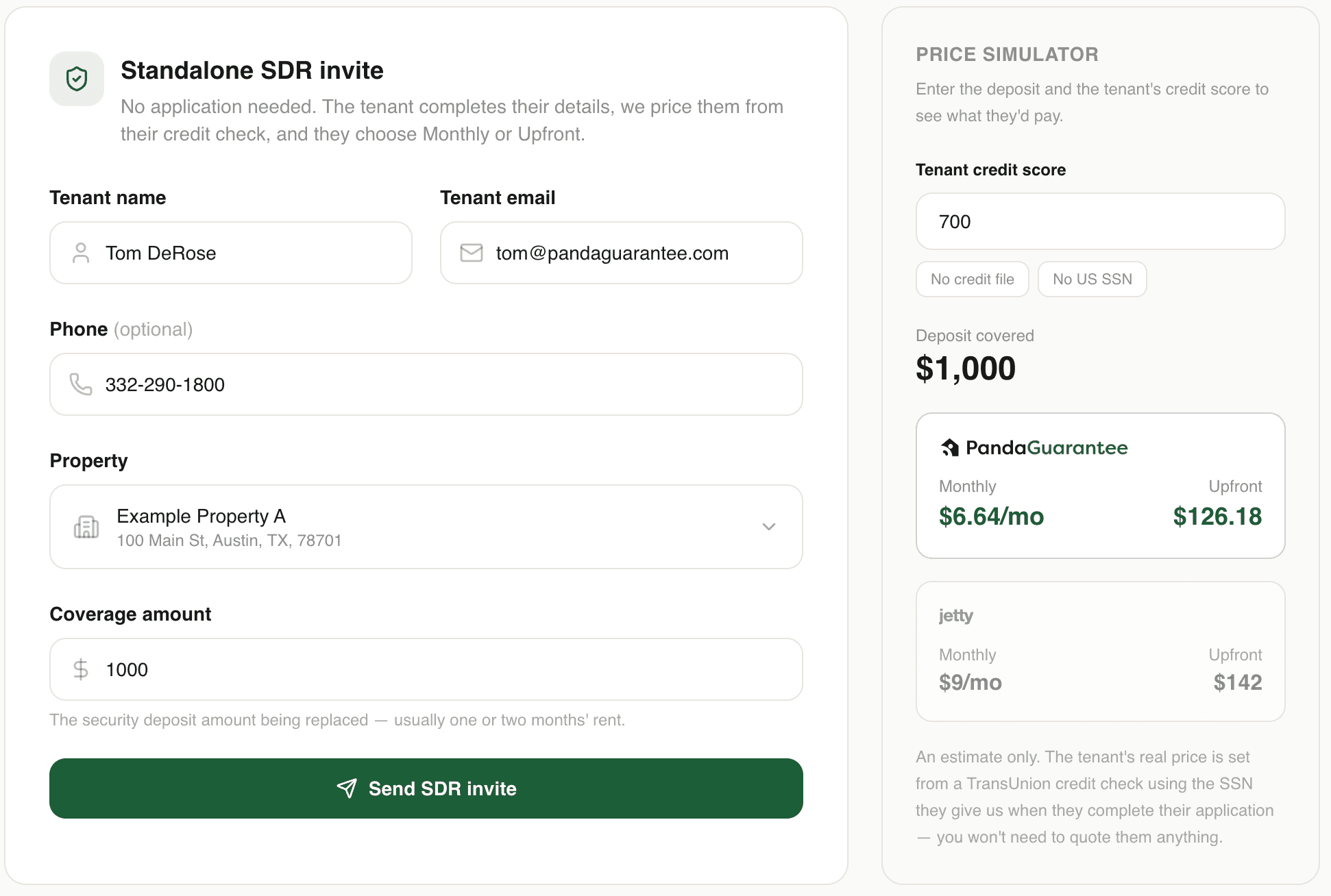
The cost depends primarily on the deposit amount, and the tenant's credit score. When inviting a tenant, you can input an example credit score to see the exact price we will offer them, as well as the price for a comparable policy they would pay with similar SDR products.
How do tenants apply?
Tenants can apply in two ways:
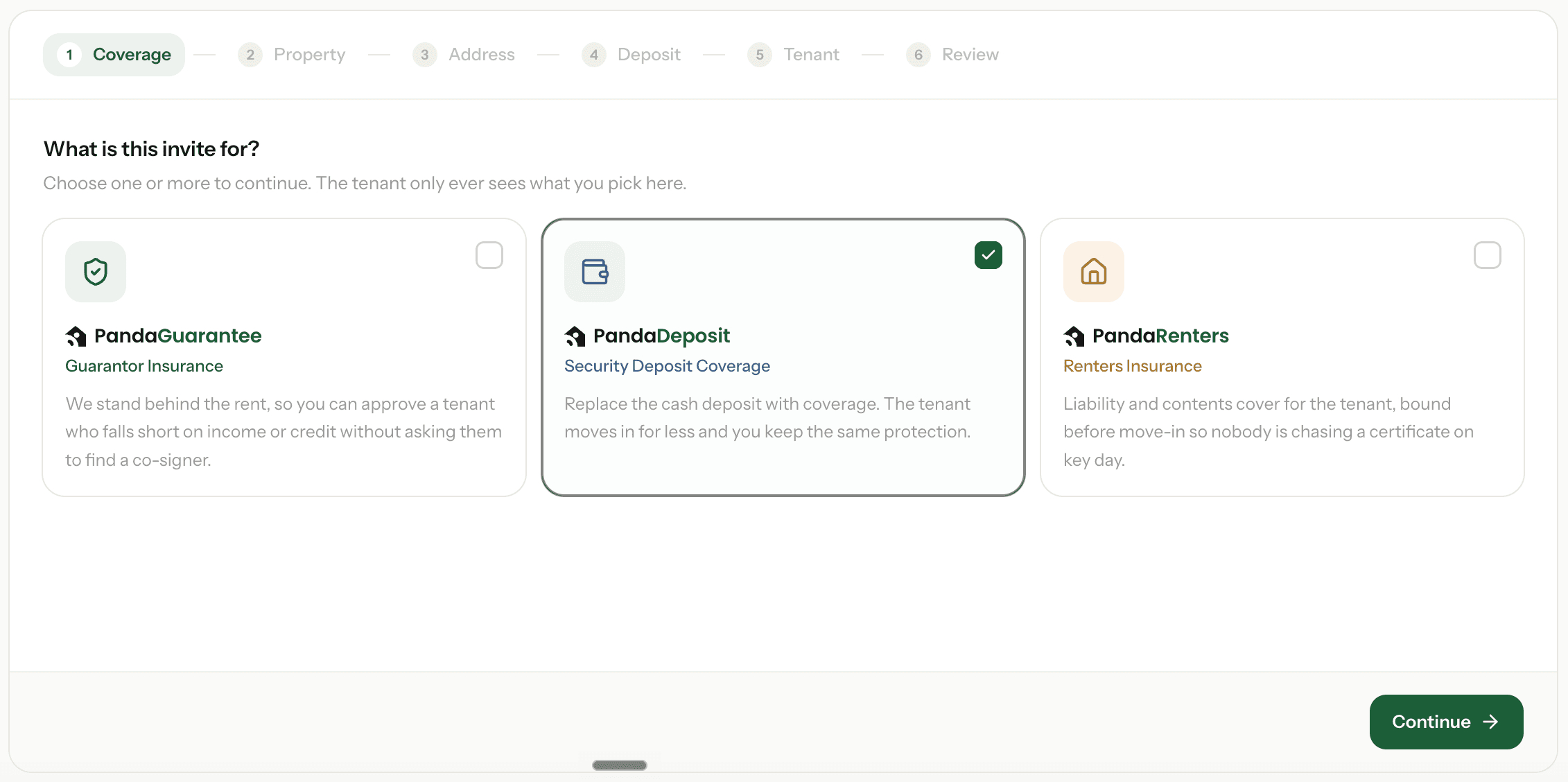
1. Proactively Inviting Tenants:
Through your landlord dashboard, you select "Invite Tenants" and follow the steps. You can see a step by step guide in our article: Invite a Tenant to Apply for PandaDeposit.
2. Invitation Link:
You are also given a unique invite link that you can provide to tenants. You can learn more about this in our article: PandaDeposit Invite Link.

Other helpful articles:
Didn't find what you needed?
Ask our team