
Refunds and Adjustments
A tenant's premium is tied to the specific lease and coverage in their application. If the lease falls through, or the coverage changes, the premium changes with it. This article covers…
On this page
Refunds and adjustments
A tenant's premium is tied to the specific lease and coverage in their application. If the lease falls through, or the coverage changes, the premium changes with it. This article covers when a tenant is owed a refund, when they'll owe more, and what that means for your coverage.
Full refund: the lease isn't signed
If a tenant pays their premium but ultimately does not sign a lease with you, they are eligible for a full refund of the premium. The bond never becomes active, and there is no coverage to cancel, the tenant is simply returned to where they started.
Partial refund: the premium goes down
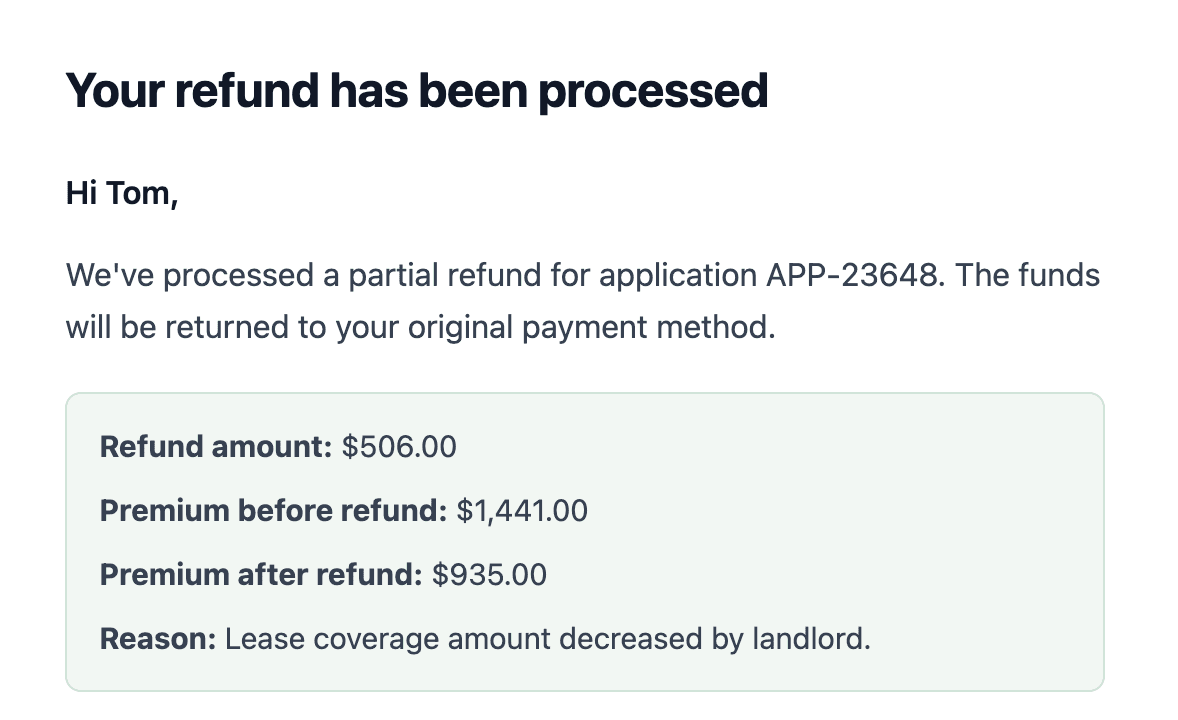
Certain changes to an application reduce the risk we're guaranteeing, and therefore reduce the premium. When that happens, we recalculate using the same formula described in Understanding tenant premiums and fees and refund the tenant the difference. Changes that can lower the premium include:
- A shorter lease or coverage term
- A lower coverage amount (for example, a reduced rent)
- Additional co-applicants or guarantors added to the application
In each case the tenant is re-quoted from the corrected inputs, and the refund equals the difference between what they paid and the new premium.
Adjustments: the premium goes up
Other changes increase the risk we're guaranteeing, and the tenant will owe the difference. Changes that can raise the premium include:
- A longer lease or coverage term
- A higher coverage amount
- A co-applicant or guarantor removed from the application
- A bond change request you submit after the bond has already been issued
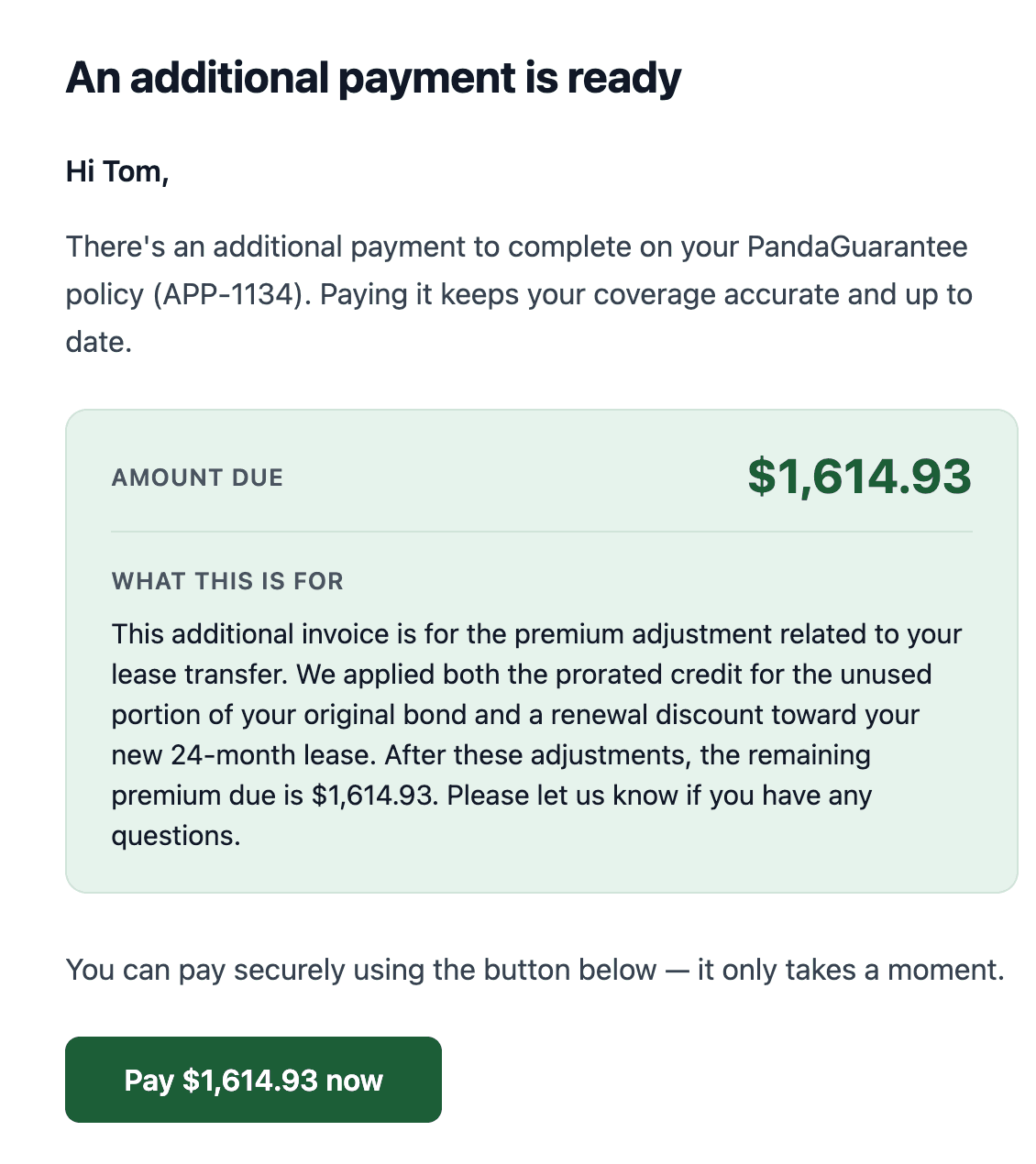
When the premium increases, the tenant receives an invoice for the difference. The updated bond is not issued until that invoice is paid. Until then, the existing bond — with its original terms and coverage amount — remains in force.
The tenant will receive an invoice with the new amount, and an explanation from us as to why they are receiving this invoice.
What this means for you
Refunds and additional premiums are handled between the tenant and PandaGuarantee; nothing is charged or credited to you. The one point to keep in mind is timing: if you request a change that increases coverage, your coverage doesn't reflect the change until the tenant has paid. If the change is time-sensitive, it's worth letting the tenant know an invoice is coming.
If you request a bond change that substantially increases coverage after the tenant has moved in, we may not be able to approve it. The tenant signed the lease on the assumption that the price they saw was all they were going to pay, so getting another invoice can be an unpleasant experience.
If you have a unique circumstance, please call or email us at support@pandaguarantee.com, and a member of our team will see what we can do.
Didn't find what you needed?
Ask our team